Massachusetts Jewish Man Marc Aisen is Finally Free from Michigan Gulag
Marc Aisen was arrested in Massachusetts, extradited across the country, and held in a jail cell in Oakland County, Michigan, for more than 2 years — all for messages sent to public officials. His case is a warning about how vague "cyber-harassment" laws can be turned against political speech.
By Staff Writer · June 30, 2026
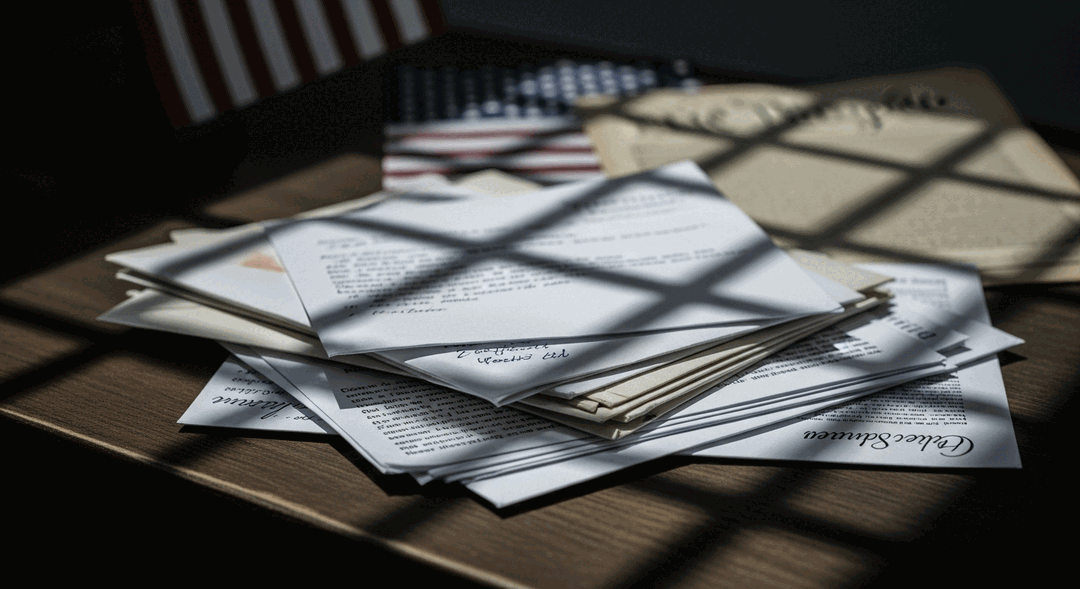
Here is a sentence that should stop every American cold: a man can be arrested at home in one state, hauled a thousand miles to another, and locked up for two and a half years — for sending emails to politicians.
That is what happened to Marc William Aisen.
On June 30, 2026, in Oakland County Circuit Court, Judge Yasmine I. Poles sentenced Aisen to 365 days in jail on each of two felony counts — and then credited him with the 931 days he had already served awaiting trial. In plain terms: the system held him longer than the sentence it ultimately imposed, and only now, with the time already extracted from his life, is he walking free. (People of the State of Michigan v. Aisen, No. 2024-287987-FH.)
The timing makes the sentence all the more striking. The very question at the heart of this case — whether these Michigan statutes can be enforced consistent with the First Amendment — is currently before the Michigan Supreme Court in a separate matter. With the laws' constitutionality unsettled at the state's highest court, Aisen's supporters argue the judge had every reason to proceed with caution; instead, they say, she came down hard.
His crime? Words.
In July 2023, from his apartment in Marblehead, Massachusetts, Aisen emailed officials in Bloomfield Township, Michigan, accusing the township treasurer, Michael Schostak, of serious wrongdoing. The messages were caustic — offensive, even — and Schostak has denied the allegations and called them defamatory. (The Jewish Legal News is not reproducing the contents; the underlying accusations are unproven.) But here is what the messages were not: threats of violence. Aisen's attorneys say no threat to anyone's safety appears anywhere in them. What the treasurer objected to, in his own cease-and-desist letter, was the content of the criticism — language he called “vile” and “hateful,” and accusations he called “defamatory.”
Schostak sent that letter on official township letterhead, copying the police chief and a sergeant. Five months later, Aisen was under arrest.
Two statutes, one chilling reach
The state charged Aisen under two laws every American — not just every Michigander — should know about. Aisen never set foot in Michigan when he sent those emails; he was a Massachusetts resident, extradited a thousand miles to be prosecuted under them. What reached him in Marblehead can reach a critic in any state:
- MCL 750.411s, Unlawful Posting of a Message — a felony carrying up to two years, triggered when a message could cause unwanted contacts that leave a “victim” feeling “terrorized, frightened, intimidated, threatened, harassed, or molested.” Not threatened with harm — merely frightened. By that standard, a public official who claims a critic's email unsettled him can set the machinery of arrest in motion.
- MCL 752.797, Using a Computer to Commit a Crime — a felony enhancer that stacks years of additional exposure onto the underlying offense, for the sin of having used a keyboard.
On May 12, 2026, a jury convicted Aisen on both. The Oakland County Prosecutor's Office, led by Karen McDonald, secured the verdict. The court entered a no-contact order protecting Schostak.
Why this should alarm everyone
A jury's verdict settles the legal question of guilt under these statutes. It does not settle the constitutional one — and that question is enormous. American law has long held that public officials must endure sharp, unpleasant, even outrageous criticism; the First Amendment's protection of the right “to petition the Government for a redress of grievances” exists precisely to shield citizens who accuse the powerful of wrongdoing. The narrow exceptions — true threats of violence, genuine criminal harassment — were never meant to swallow that rule. Aisen's defenders argue this prosecution did exactly that: it converted offensive political speech into a felony.
The mechanics make it worse. A statute that turns on whether someone felt frightened invites selective enforcement against unpopular speakers. An extradition across state lines for emails raises the specter of any official, anywhere, reaching into another state to punish a critic. And a pretrial detention that outlasts the sentence itself — implicating Michigan's own 180-day rule, designed to prevent precisely this — shows how the process can become the punishment, conviction or not.
If the state can do this to Marc Aisen, civil-liberties advocates warn, it can do it to anyone whose words a powerful person finds frightening.
A defense team takes up the case
Aisen did not face the system alone. Rabbi Jon Gross, Esq., an attorney with the Jewish Community Advocacy Council (JCAC), learned of the case while Aisen sat in an Oakland County jail and flew to Michigan to represent him, enlisting David Peters of the Pacific Justice Institute to join the defense.
“As soon as I learned about Mr. Aisen languishing in jail unfairly for over two years, I did everything I could to bring attention and resources to this case,” said Rabbi Gross. “We are pleased that Marc Aisen is now a free man.”
The team has since filed a First Amendment action against Michael Schostak, the Bloomfield Township treasurer whose complaint set the prosecution in motion. Mark L. Javitch, Esq., also of the JCAC, is representing Aisen in that action.
Timeline of the Marc Aisen case
- 2021 — Aisen, living in Massachusetts, sends a series of angry emails to public officials in Bloomfield Township, Michigan, about a property and tax dispute.
- 2022 — Bloomfield Township treasurer Michael Schostak files a complaint; Michigan prosecutors charge Aisen under the state’s aggravated stalking and computer-crime statutes.
- 2022 — Aisen is arrested in Massachusetts and extradited across the country to Oakland County, Michigan.
- 2022–2024 — Aisen is held in the Oakland County jail for more than two years awaiting resolution of the case, largely for messages sent to public officials.
- 2024 — Rabbi Jon Gross, Esq., of the Jewish Community Advocacy Council learns of the case, travels to Michigan, and enlists David Peters of the Pacific Justice Institute for the defense.
- 2026 — Aisen is released. A felony conviction remains on the books, and his team files a First Amendment action against Schostak, with Mark L. Javitch, Esq., representing Aisen.
Frequently asked questions
Who is Marc Aisen?
Marc Aisen is a Massachusetts Jewish man who was extradited to Michigan and jailed for more than two years over emails he sent to public officials in Bloomfield Township, Michigan.
What was Marc Aisen charged with?
He was prosecuted under Michigan statutes covering aggravated stalking and the use of a computer to commit a crime — laws written for harassment that were applied here to written complaints directed at government officials.
Is Marc Aisen out of jail?
Yes. Aisen is a free man. His felony conviction, however, has not been vacated, and an appeal may follow.
Why does the Marc Aisen case matter for free speech?
The case establishes that emails to public officials — however harsh — can support a felony conviction in Michigan. Civil-liberties advocates argue that this chills the constitutional right to petition government for redress of grievances.
Who represented Marc Aisen?
Rabbi Jon Gross, Esq., of the Jewish Community Advocacy Council, together with David Peters of the Pacific Justice Institute. Mark L. Javitch, Esq., represents Aisen in the subsequent First Amendment action.
The takeaway
Marc Aisen is free today, but the precedent is not. A felony conviction for emailing public officials now sits on the books in Michigan, and an appeal may follow. Whatever one thinks of Aisen's words — and no matter how offensive to some — the principle his case puts at risk belongs to all of us: the right to confront our government, in our own words, without a jail cell waiting at the end of the sentence.
The Jewish Legal News will continue to follow this case.
Disclosure: The Jewish Legal News is acquainted with members of Mr. Aisen's defense team.
Related Coverage
"Out of Touch" JCRC Censors Jewish Moms' Feedback
While claiming to conduct a "survey" of Bay Area Jewish community members, JCRC censored comments from Jewish mothers who expressed that they feel JCRC does not represent them. JCRC created the firestorm over email and Instagram by…
Mark L. Javitch, Esq. · February 4, 2025

Censorship Plagues Passover Freedom: Being Censored by my Fellow Jews Doesn’t Make Me Free This Passover
Being Jewish, I look forward to Passover every year. It's a time to celebrate our most cherished values and connect with family and community. However, this year, it's hard to connect because I've been feeling disheartened by the lack of…
Mark L. Javitch, Esq. · April 10, 2023

1st Amendment Rights Expanding Online
Despite the news being mostly negative when it comes to censorship online, another trend towards free speech online has taken hold. Dozens of courts across the country, including at least 4 circuit courts, have determined that you DO have…
Mark L. Javitch, Esq. · April 1, 2023
What Is the JCPA? The Jewish Council for Public Affairs, Explained
A plain-English guide to the Jewish Council for Public Affairs (JCPA): what it does, its history, its structure, and why it's back in the news under CEO Amy Spitalnick.
Staff Writer · July 15, 2026
Comments
No comments yet. Be the first to weigh in.