Amy Spitalnick's Charlottesville Lawsuit: Integrity First for America, Explained
Before running the JCPA, Amy Spitalnick led Integrity First for America — the nonprofit that funded Sines v. Kessler, the landmark civil suit that bankrupted the organizers of the deadly 2017 Charlottesville "Unite the Right" rally.
By Staff Writer · July 16, 2026
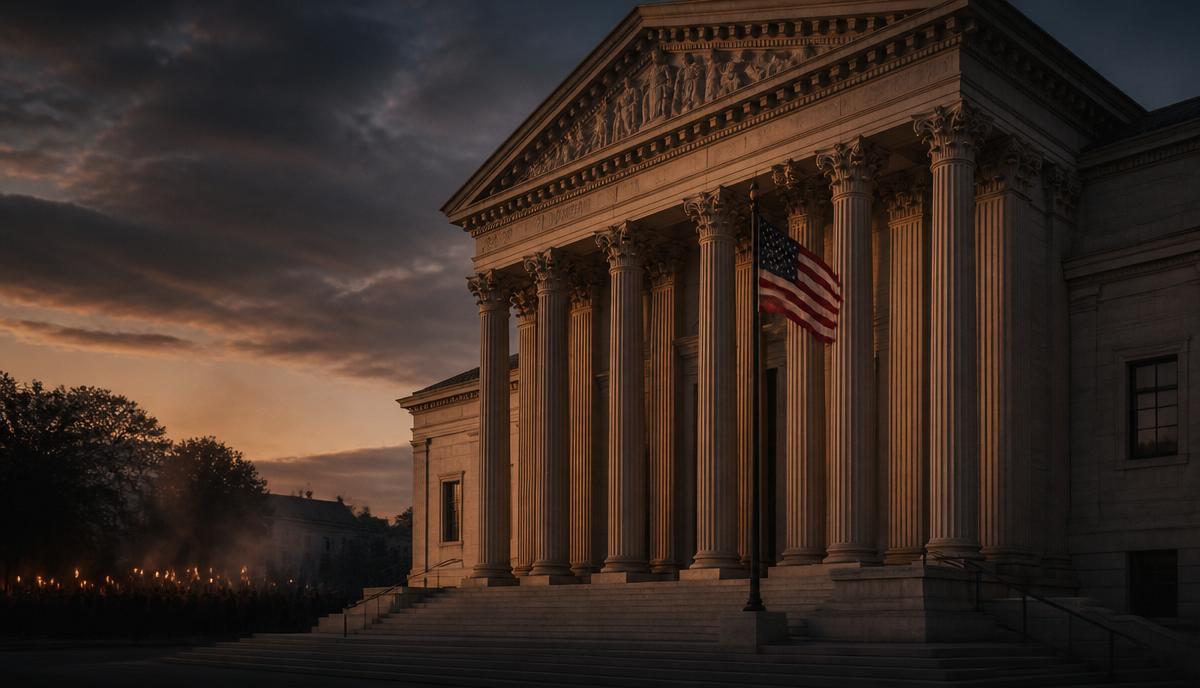
Long before she took over the Jewish Council for Public Affairs, Amy Spitalnick ran a small nonprofit with a single, audacious goal: use the civil courts to bankrupt the neo-Nazi and white-nationalist leaders who organized the deadly 2017 "Unite the Right" rally in Charlottesville, Virginia. That nonprofit was Integrity First for America (IFA), and the case it bankrolled — Sines v. Kessler — is now widely cited as the most significant civil-rights verdict against organized American extremism in a generation.
What Integrity First for America was
IFA was founded in 2017 as a nonpartisan 501(c)(4) organization with a narrow mandate: fund and support high-impact civil litigation against violent extremists who threaten American democracy and civil rights. Spitalnick joined as executive director in 2019 and served as the organization's public face throughout the trial and its aftermath. Rather than build a permanent institution, IFA committed to a defined mission — see the Charlottesville case through — and then wound down operations in 2022 after the verdict was returned.
Sines v. Kessler: the case IFA funded
Filed in October 2017 in the U.S. District Court for the Western District of Virginia, Sines v. Kessler was a civil suit brought by nine Charlottesville residents who were injured — physically, emotionally, or both — during the August 2017 rally. The plaintiffs were represented by a legal team led by Roberta Kaplan and Karen Dunn, working alongside firms including Kaplan Hecker & Fink and Cooley LLP.
The complaint alleged that the rally's organizers — including Jason Kessler, Richard Spencer, Christopher Cantwell, the League of the South, Vanguard America, and the National Socialist Movement, among more than two dozen defendants — conspired to commit racially motivated violence in Charlottesville. The legal theory rested primarily on the Ku Klux Klan Act of 1871 (42 U.S.C. §1985(3)), a Reconstruction-era statute originally passed to give the federal government tools to combat organized racial terror in the postwar South.
The verdict: over $26 million in damages
After a four-week jury trial in the fall of 2021, the jury returned its verdict on November 23, 2021. It found the defendants liable on state-law claims of civil conspiracy and awarded plaintiffs more than $26 million in compensatory and punitive damages. (The jury deadlocked on the two federal KKK Act conspiracy counts, but the massive state-law damages award — later adjusted by the court under Virginia's punitive-damages cap — is what has effectively defanged the defendants financially.)
For Spitalnick and IFA, the practical result was as important as the legal one. Organizational defendants such as the National Socialist Movement and Vanguard America now face judgments they cannot realistically pay; individual defendants such as Richard Spencer and Christopher Cantwell have spent the years since the verdict in a running fight over discovery sanctions, contempt findings, and collection efforts.
Why the case still matters
The Charlottesville lawsuit did three things at once, and they explain why it still shows up in every serious profile of Amy Spitalnick:
- It set a template for civil litigation against organized extremism. Advocacy groups have since pointed to Sines v. Kessler as a model for suits against January 6 organizers, militia networks, and other coordinated political violence.
- It revived a 150-year-old civil-rights statute. Even without a federal verdict, the KKK Act theory was fully litigated to a jury on a modern factual record — a legal roadmap for future plaintiffs.
- It built Spitalnick's public profile. The trial produced dozens of national television appearances, long-form magazine profiles, and eventually the platform that carried her into the CEO role at the JCPA in 2023.
The line from Charlottesville to the JCPA
Critics and supporters of Spitalnick's tenure at the Jewish Council for Public Affairs frequently reach back to the Charlottesville lawsuit to make their case. Supporters point to it as evidence that she has done tangible, adversarial work against violent antisemites — not just issued statements about them. Critics argue that the same coalition-oriented, progressive-aligned strategy that made IFA effective in a courtroom has translated poorly into the JCPA's broader communal role, where her outreach to left-wing groups has drawn sustained pushback.
Both sides agree on one thing: without Sines v. Kessler, Amy Spitalnick is not a household name in American Jewish institutional life. The Charlottesville lawsuit is the hinge that turned a communications-professional-turned-nonprofit-director into the CEO of the umbrella body representing 125+ Jewish community-relations organizations.
Further reading on this site
- Who Is Amy Spitalnick? A Profile of the JCPA CEO
- What Is the JCPA? The Jewish Council for Public Affairs, Explained
- Spitalnick's JCPA Builds Bridges With Left-Wing Antisemitism
Frequently asked questions
What was the Charlottesville lawsuit?
Sines v. Kessler was a federal civil lawsuit brought by nine Charlottesville residents against the organizers of the August 2017 “Unite the Right” rally, alleging a conspiracy to commit racially motivated violence under the Ku Klux Klan Act of 1871.
What was Amy Spitalnick’s role in it?
Amy Spitalnick was executive director of Integrity First for America, the nonprofit that financed and publicly championed the case. She did not try the case — that was the litigation team — but she ran the organization that made a years-long, resource-intensive civil trial possible.
What was the verdict?
In November 2021 a Charlottesville jury returned a verdict against the white-supremacist organizers on state-law claims, awarding more than $26 million in damages, later reduced by the court under Virginia’s punitive-damages cap.
What happened to Integrity First for America?
The organization wound down in 2022 after the case concluded. Spitalnick went on to lead the Jewish Council for Public Affairs in 2023.
Why does the case still matter?
It revived a Reconstruction-era civil-rights statute as a practical tool against organized extremist violence, and it became the template Spitalnick has cited for confronting antisemitism and extremism through civil litigation rather than criminal prosecution alone.
Tags
Related Coverage

Who Is Amy Spitalnick? Profile of the JCPA CEO
Amy Spitalnick is the CEO of the Jewish Council for Public Affairs. A profile of her career from Integrity First for America and J Street to JCPA, her media presence, and the AOC-AIPAC controversy.
Staff Writer · July 11, 2026

What Is the JCPA? The Jewish Council for Public Affairs, Explained
A plain-English guide to the Jewish Council for Public Affairs (JCPA): what it does, its history, its structure, and why it's back in the news under CEO Amy Spitalnick.
Staff Writer · July 15, 2026
MIT Urges Supreme Court to Deny Review in Campus Antisemitism Case
MIT's brief in opposition tells the Justices the First Circuit's ruling was fact-bound, creates no circuit split, and that a broader Title VI rule would suppress political speech on campus.
Mark L. Javitch, Esq. · August 27, 2026

StandWithUs v. MIT: Read Every Supreme Court Brief
Eight amicus briefs back the Title VI cert petition against MIT, and MIT has now answered. Read the petition, all eight amicus briefs, and the brief in opposition.
Mark L. Javitch, Esq. · August 27, 2026
Comments
No comments yet. Be the first to weigh in.